Government determined to “fight people’s corner” on energy, Miliband tells Uswitch
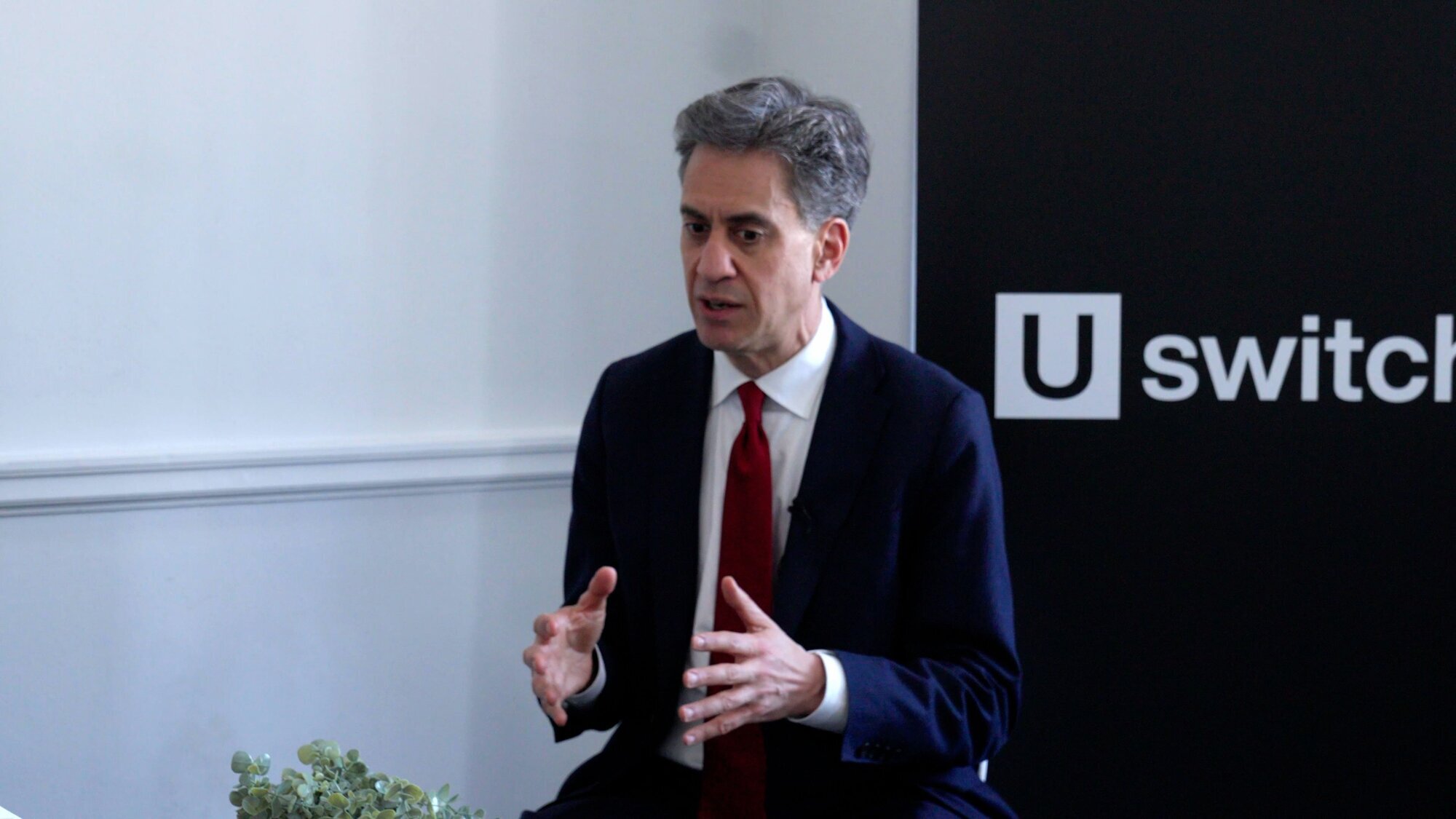
The government is determined to “stand by people and fight their corner” in recognition of the fact that “energy bills were still too high even before this crisis [in the Middle East] began”, said the Secretary of State for Energy and Net Zero, Ed Miliband, in an interview with Uswitch.
Speaking to Richard Neudegg, Uswitch’s Director of Regulation, in London on Thursday, the Secretary of State reiterated that the government is “doubling down” and “going as fast as we can” as it looks for ways to reduce the effects of global market volatility on UK energy bills.
“We get that the cost of living is the number one issue for people. And if intervention is necessary, we will intervene…we're determined in this crisis to fight people's corner, whether that's in relation to energy bills or petrol retailers”, he added.
Concerns have arisen from customers about a large rise in energy bills this year as a result of the conflict. Miliband stressed, however, that in the short-term, customers will actually “see the price cap…fall by £117 from the previous quarter…because of actions that the government took in the budget to take money off bills. And that is fixed until the end of June.” Customers on fixed tariffs will also benefit from these lower bills, he added, with the reductions coming into effect from 1 April.
While some customers have been able to secure fixed deals that lock in rates similar to the lower April price cap for a longer period, there has been fixed deal pricing volatility since the conflict began on 28 February, with the effective closure of the Strait of Hormuz, an important shipping route for oil and gas.
For heating oil customers - those in predominantly rural households which aren’t part of the gas grid and use oil to heat their homes - who aren't covered by the price cap, Miliband added, the government has “also made available an extra £50 million to local authorities for those who are really in financial difficulties…to get help out of the door as quickly as we could.”
The current conflict and its impact on UK energy bills has been compared to the energy crisis which began in 2021 and was exacerbated by the Russia-Ukraine war starting a few months later.
Miliband stressed, however, that this is a different situation. He said “I believe some lessons have been learned from the past - I think the sector is better regulated than it was back then and so hopefully that helps. I think the thing that is in common with that crisis is that…we've got to get off these fossil fuel markets because we don't control the price of gas”.
One of the government’s key election pledges was to bring down the cost of energy. Miliband said that there are additional measures in progress to improve the UK’s energy security and reduce the impact of global events on UK customers’ energy bills, including driving heat pumps and solar adoption.

You might also like

18 March 2026
Mojo Mortgages harnesses AI to become UK’s fastest-growing digital mortgage broker
Read More
17 December 2025
Tempcover eyes next stage of growth with new CEO appointment
Read More
4 December 2025